
Ashfield Innovation and Technology Park site proposal
The vision
Ashfield District Council’s vision is to attract economic investment into the local area and assist in modernising the economy through advancing existing businesses and
attracting new ones. The site offers the opportunity to create a cluster of businesses, alongside a national centre of excellence, which together will make a significant contribution to the local and regional economy.
- Existing businesses: the development will offer space to existing local businesses wishing to expand, enabling them to stay in the area and to continue supporting the local economy
- New businesses: the scheme will provide a physical environment and synergy which will attract new businesses to the area
- Destination: the development will accelerate the positioning of Ashfield as a ‘go to’ destination for automation, innovation and high value manufacturing, contributing as part of the East Midlands Investment Zone sites
- Economic Growth: the AITP will stimulate economic growth within the district by attracting businesses in high-value sectors, particularly advanced manufacturing, technology and innovation
- Job creation: the AITP will generate a significant number of local job opportunities in research and development, manufacturing, and in various support roles, thereby reducing unemployment and contributing to local prosperity
- Collaboration: the site will serve as a platform for innovation, encouraging collaboration among businesses, educational institutions, and research organisations
Location and context
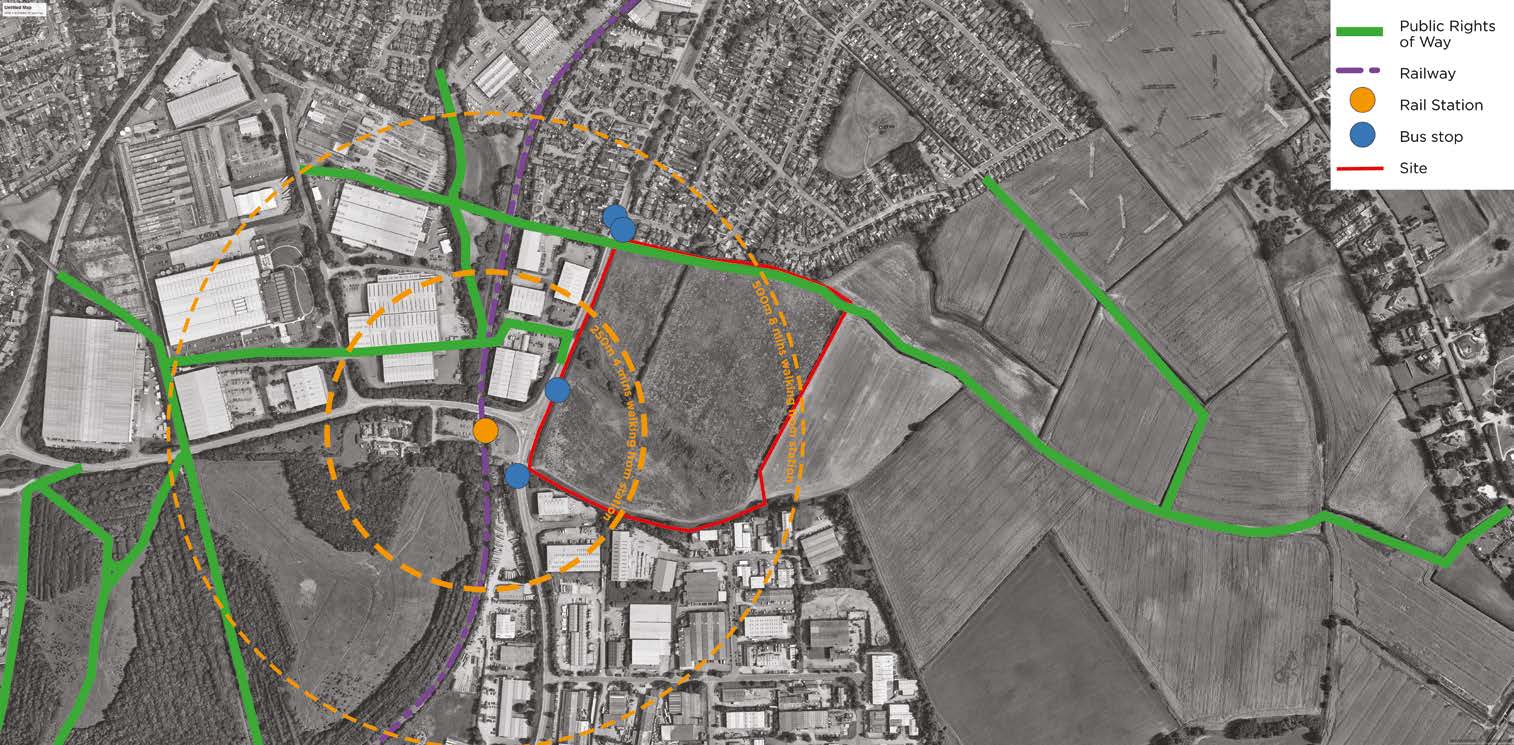
The Ashfield Innovation and Technology Park is a 30 acre (11 hectare) site located to the east of Lowmoor Road, Sutton in Ashfield. The site is well connected, being opposite Sutton Parkway railway station and with good access to the A38 and M1. As a development site, it is ideally situated in the heart of the country with excellent transport links, with access to over of 60 percent of the UK markets within 2 hours.
Residential properties lie to the north, north-west and south-west of the site and to the south and west are industrial and warehousing units on Observatory Way and the Lowmoor Business Park.
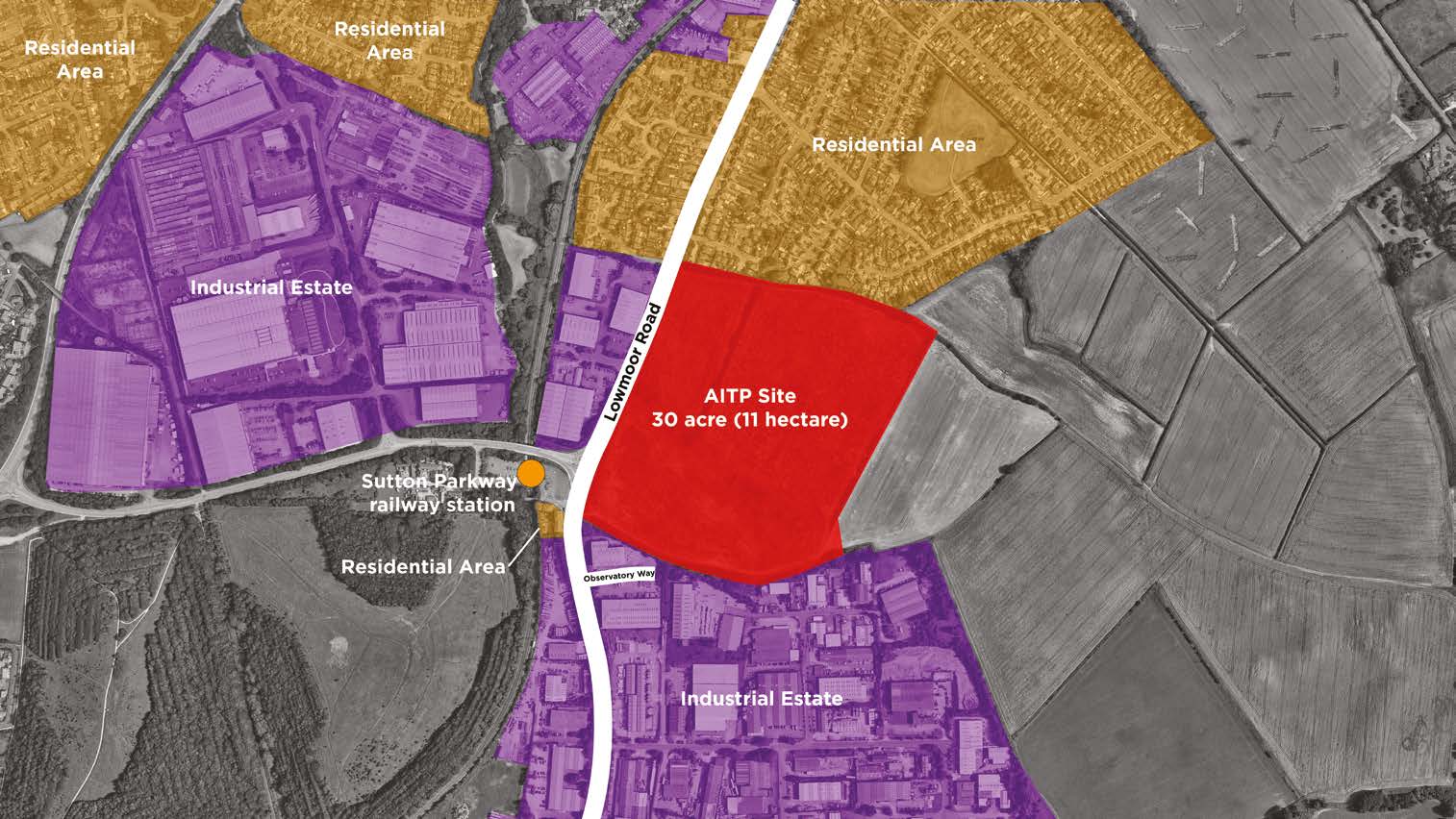
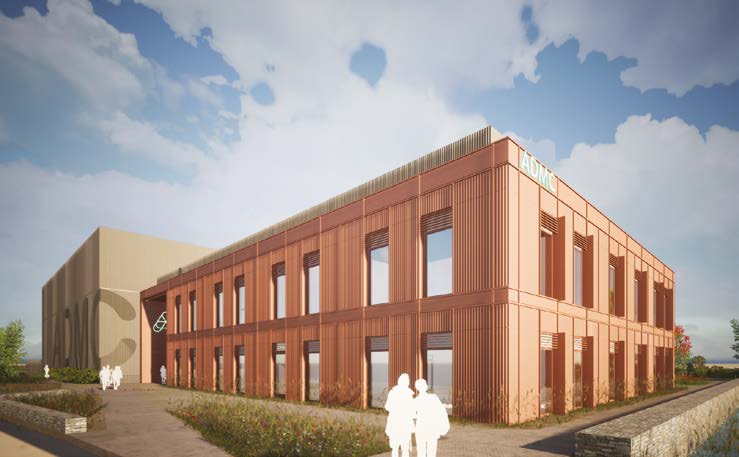
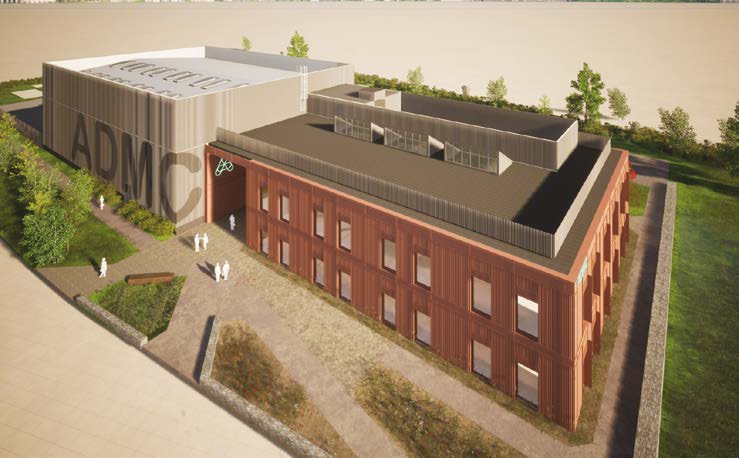
Construction is underway on the first phase of the masterplan for an Automated Distribution and Manufacturing Centre (ADMC), which will operate as a national centre of excellence for automation, assisting and attracting innovation and high value manufacturing to the area. After this initial catalyst, the next phase is the Ashfield Innovation and Technology Park (AITP) which will extend across the rest of the site.
The Masterplan
A development team has worked to prepare a masterplan which comprises:
“7 new units in a range of sizes, providing a mix of office, research and development and light industrial floorspace, general industrial floorspace and storage and distribution floorspace, alongside servicing, car parking, cycle parking, attenuation pond and buffer landscaping on the northern and eastern boundaries”
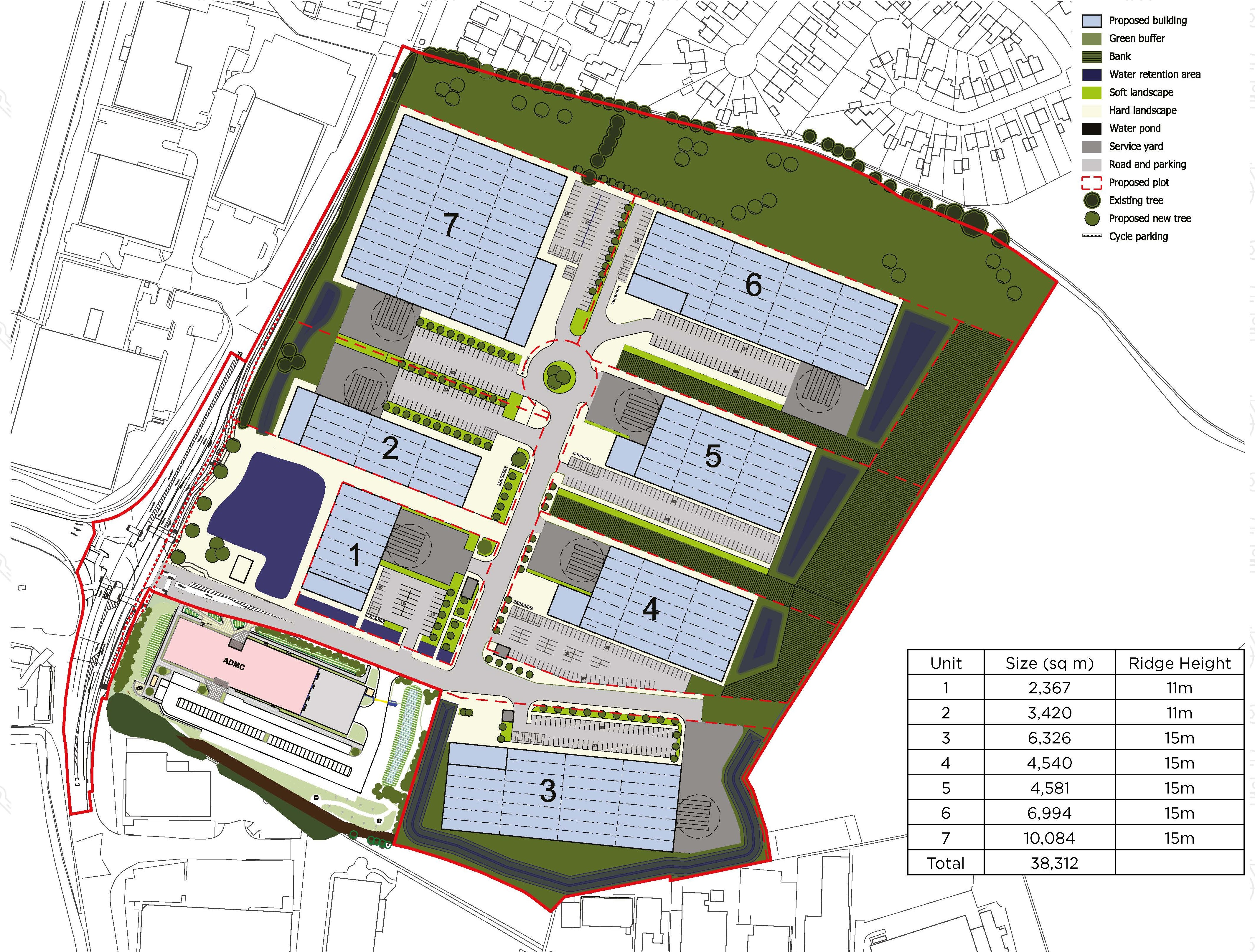
The key elements of the proposed development are outlined:
- Access from Lowmoor Road, shared with the approved ADMC scheme
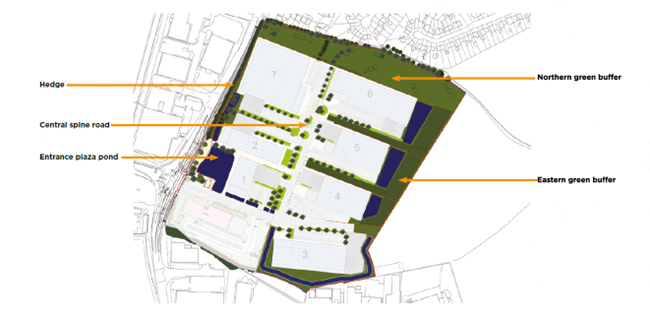
- 7 no. units located either side of a central spine road
- Entrance plaza formed around an attenuation pond
- Structural landscaping focussed on the spine road including tree planting
- Green buffers on the northern and eastern sides of the site
- Car parking and covered cycle parking for each unit
- Cycle route from Lowmoor Road into the site
- Service yards to support the operation of each unit
In total, the AITP will provide some 38,300 sq m of new employment floorspace in different sized units to accommodate a range of requirements from companies involved in automation, innovation, precision manufacturing and distribution.
Layout and market demand
The configuration, size, mix and servicing arrangements of the park are underpinned by market analysis undertaken by FHP, specialist commercial agents, and reflect known local and regional demand. The office component within each unit will be fitted out to meet Cat A specification requirements with the rest of the floorspace being flexible to meet the needs of a range of potential occupiers in the research and development, manufacturing and distribution sectors.
Entrance plaza
Unit 1 will be set back from Lowmoor Road at the entrance in order to create an entrance plaza formed around an attenuation pond. The aim of the entrance plaza is twofold: firstly, to create a gateway to the park, and secondly, to provide surface water attenuation.
Landscaping
Structural landscaping is proposed along the spine road of the site to enhance the amenity of the park for prospective occupiers and to provide biodiversity benefits. The green corridor comprises tree planting, shrubs and plants. It will incorporate swales which will mitigate against surface water flooding.
Boundaries
The proposed development has been carefully designed to include appropriate boundary treatment, with security fencing and hedgerows to soften the boundary.
Buffers
extensive landscape buffer zones are proposed on the northern and eastern side of the site. Specifically, the northern buffer is intended to protect residential amenity for houses to the north of the site and will incorporate additional tree planting, wild flower areas and a footpath/cycleway for residents to enjoy.
Drainage
The scheme will address surface water flooding by controlling flows across the site through a number of measures including the entrance plaza attenuation pond, swales (vegetated drainage channels which collect water naturally), permeable paving and underground tanks which hold water until it can be released.
Noise
the layout ensures that service yards are orientated away from residential properties to the north in order to control potential noise. Any external mechanical plant will need to operate within an agreed level to protect residential amenity.
Appearance:
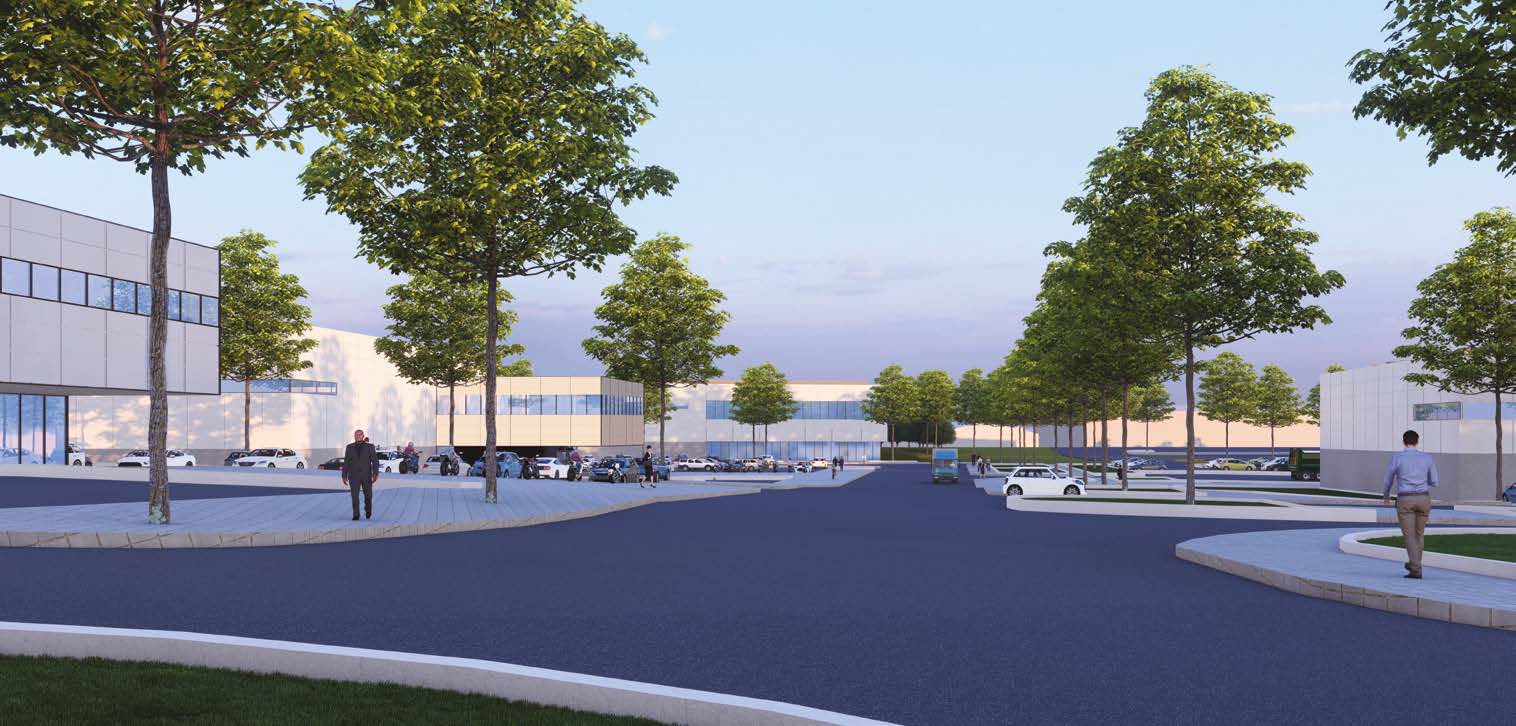
Draft design indicates that the units will comprise a steel portal frame on a brick plinth with cladding above. The main entrance, reception and office component of each unit will comprise curtain wall glazing providing a focal point for each unit highlighting the front elevation.
Whilst indicative at this stage, the design of the AITP is a contemporary industrial scheme blended with elements that nod to Ashfield’s past, creating a cohesive and recognisable identity for the development. The design, materials and colour scheme used in the new buildings will complement the ADMC and create a unified, modern industrial aesthetic.
The AITP buildings will utilise materials like steel, concrete, and composite cladding in shades of grey, charcoal, and earthy tones that reflect both Ashfield’s industrial past and the ADMC’s contemporary style. Entrances and office sections will be highlighted with subtle accent colours, while glazed facades will provide transparency and natural light, aligning with sustainable building principles.
Movement and transport
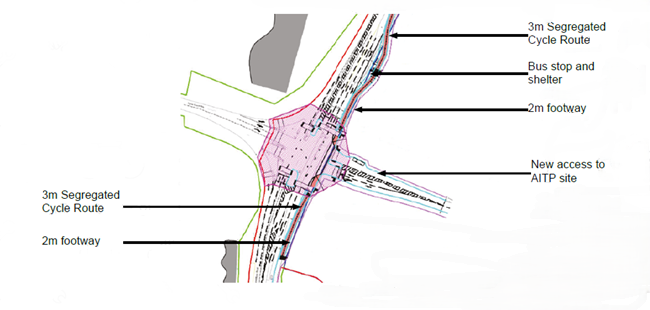
A new vehicular access is proposed opposite Penny Emma Way and will be constructed as part of the ADMC scheme. This will form a fourth arm to the junction and provides access into the rest of the AITP site. All units will be accessed from a central spine road.
The transport impacts of the AITP are currently being assessed along with measures to address this.
Public transport accessibility
The site is in a highly sustainable location, given its proximity to Sutton Parkway railway station, local bus routes and cycle network. This connectivity will encourage the use of public transport, cycling, and walking, supporting low carbon commuting options for employees and visitors.
Cycling
The new junction will accommodate the existing cycle route on Lowmoor Road and extend this into the site. Each unit has covered cycle parking.
Servicing
Each unit has a service yard to contain all servicing activities, including storage. The service yards supporting Units 6 and 7 to the north of the site will be enclosed by an acoustic wall to protect residents from noise and disturbance.
Car parking
Each unit is supported by car parking. Electric charge points will be provided for both cars and HGVs with 20 percent being active and 80 percent being passive to accommodate future demand.
Landscaping and ecology
Landscaping and ecology have been key to the design of the AITP. The design integrates key green features to enhance visual appeal, manage environmental impact and support biodiversity.
Northern green buffer
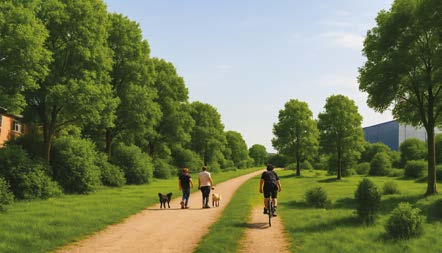
A green buffer to the north will act as a natural corridor, providing a separation between the neighbouring residential areas and the industrial and commercial activities on-site. This area will not only improve privacy for residents but will also serve as a pocket of local biodiversity, creating a habitat corridor that aligns with sustainable development goals.
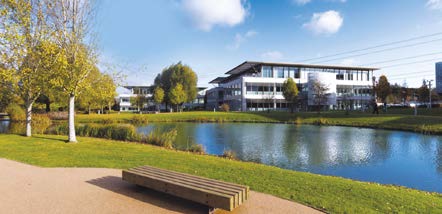
Entrance plaza pond
A pond area at the entrance will act as a welcoming feature to the site and also provide important rainwater management. Designed to manage surface water sustainably, it will ensure resilience against heavy rainfall while contributing to the park’s aesthetic. Further rainwater management ponds are situated on the eastern plots, complementing the main pond and enhancing water absorption across the site.
Eastern green buffer
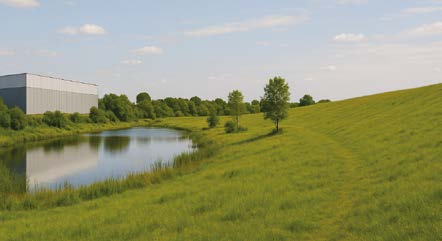
On the eastern boundary of the site a green buffer is proposed at current ground level, with the proposed employment units sunk down to a lower level, matching levels on the western side of the site. This higher level green buffer will soften longer distance views of the scheme from the surrounding area to the east.
Central spine road
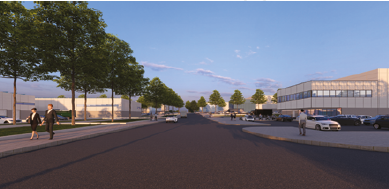
The central spine road will be lined with trees, creating a cohesive and shaded environment for pedestrians and vehicles.
Ecology
The green buffer zones to the north and east will support biodiversity and act as ecological corridors. These spaces will not only mitigate the visual and environmental impacts of the development on nearby residential area, but will also contribute to a biodiversity net gain across the site.
Trees
Whilst a number of trees will be removed to facilitate the development, concentrated within a tree belt within the centre of the site which cannot be retained due to its location, mitigation is proposed in the northern and eastern boundaries and along the central spine road within the site where more than 100 new trees will be planted.
Energy efficiency
It is the Council’s aim that the masterplan should be based on sustainable principles from construction through to operation. The masterplan applies passive design principles and a ‘fabric first’ approach, optimising building materials to minimise energy demand. The strategy also includes exploiting local energy resources, producing and storing renewable energy and supplying energy efficiently.
In respect of energy provision, each unit will be supported by air source heat pumps (ASHP) and solar photovoltaic panels (PV), thus ensuring the park operates in an energy efficient manner which prioritises renewable energy.
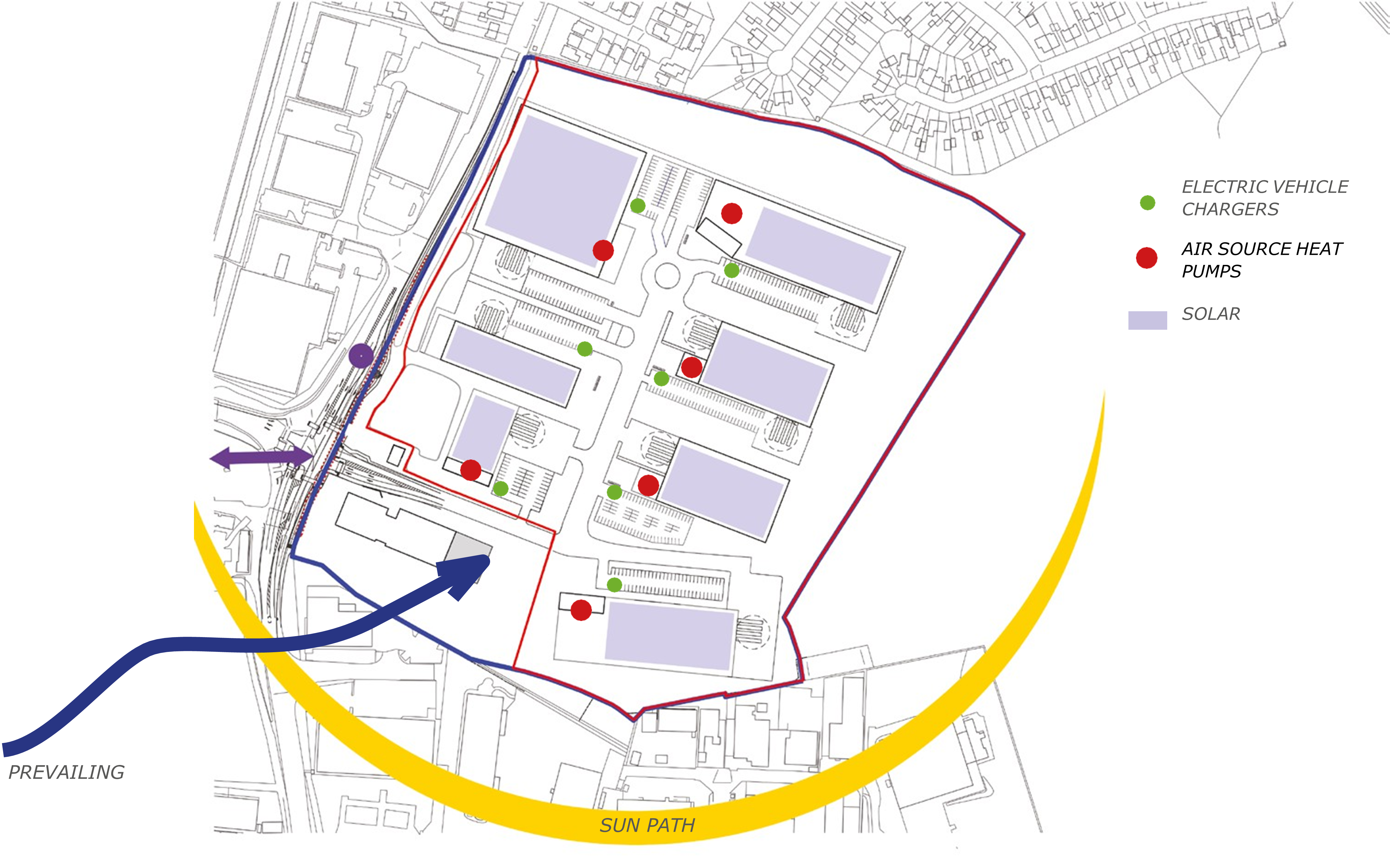
In addition, buildings will promote passive solar gains through careful orientation, maximising natural light and ventilation and reducing the need for artificial lighting and heating. Glazed office facades with solar shading will provide natural daylight while minimising the risk of overheating during warmer months, enhancing indoor comfort and energy performance.
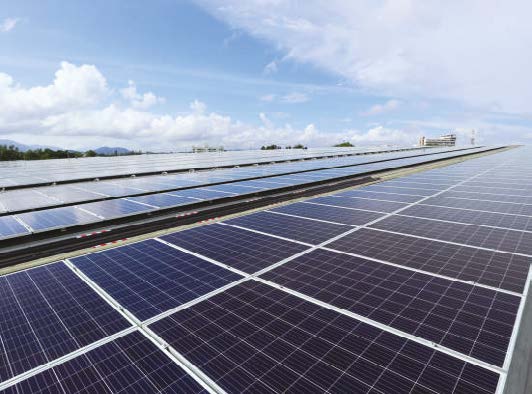
PV panels can be integrated on roofs
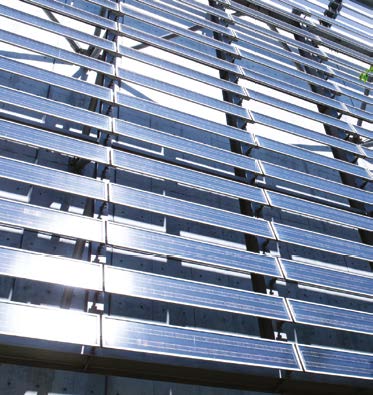
PV panels can be in facades
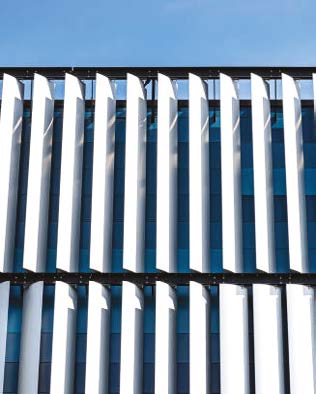
Solar gains will be controlled with solar shading devices
Next steps
Planning application
An outline planning application will be submitted later this year to establish the principle of the proposed masterplan. Detailed matters in respect of scale, layout, landscaping and appearance will be reserved matters and in due course, as potential occupiers or prospective purchasers come forward, these matters will be submitted in respect of each unit. The outline application will establish a base position to which subsequent reserved matters should have regard.
Your views
We would welcome your feedback and invite comments by completing the online survey (link in related links section on this page).
Related links
Page last updated 18 November 2025